

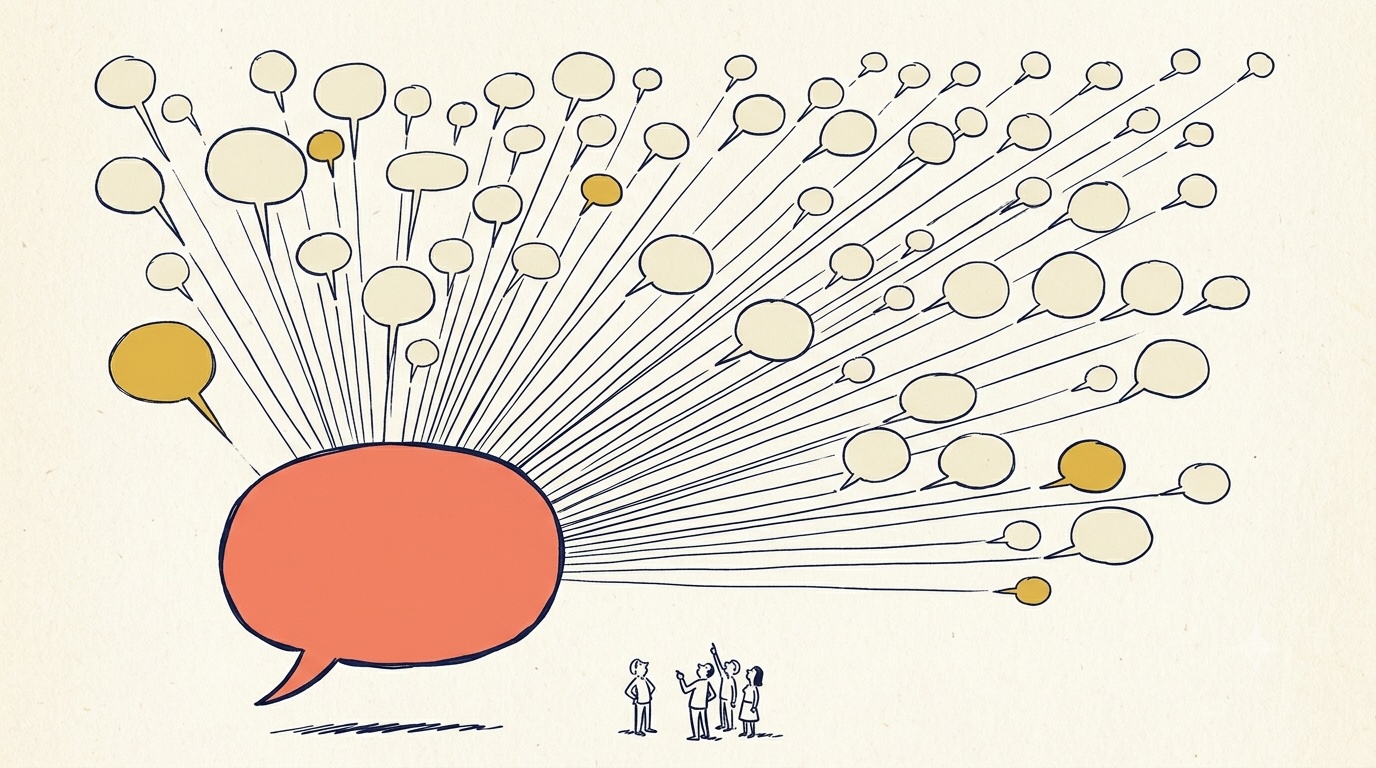
The Business Case for a Customer Community Platform
A customer community platform is a branded digital space where your customers learn from each other, answer questions, share feedback, and advocate for your product — all without opening a support ticket. For businesses spending more than $3,000/month on support staffing, the economics are immediate: every peer-resolved question in a community replaces a support interaction that typically costs somewhere between $5 and $15 to handle (industry estimates vary widely — measure your own cost per ticket before modelling).
This isn’t a social media experiment. It’s an owned channel that compounds over time. Every answered question, product tip, or use-case story posted in your community becomes a permanent, searchable asset — unlike a private support ticket that vanishes once resolved. The difference between a social community platform and a traditional help desk is the difference between renting customer relationships and owning them.
To be clear about scope: this article covers community platforms for customer education, peer support, advocacy, feedback, and retention. For the security and privacy angle — including access controls, data sovereignty, and compliance — see our full guide on building a secure branded community.
The Market Opportunity
Three forces are pushing companies toward owned communities: support costs that scale linearly with headcount, declining organic reach on rented social channels, and customers who increasingly expect to solve problems themselves rather than wait on an agent.
Key stats:
- Community platform vendors such as Vanilla Forums and Higher Logic publish benchmarks putting ticket deflection in the 30–50% range, with better retention among members — useful directionally, but these are vendor-published figures and your own numbers will differ
- Zendesk’s CX Trends research has consistently found that most customers would rather solve a problem themselves than contact a representative
- Peer-written answers tend to out-engage brand-written content, because they read as experience rather than marketing
The Core Requirements for a Customer Community Platform
Not every online community software platform is built for customer-facing use cases. A platform designed for internal teams or social networking won’t deliver the support deflection and retention outcomes you need. Here’s what matters:
| Requirement | Why It Matters | Priority |
|---|---|---|
| Searchable, persistent discussions | Turns every answer into a reusable support asset; SEO value compounds over time | Must-have |
| Topic-based groups or spaces | Organizes content by product area, use case, or customer tier so users find relevant answers fast | Must-have |
| Rich profiles and reputation system | Identifies power users and advocates; gamification drives participation | Must-have |
| Notifications and activity feeds | Keeps members returning; email and push notifications are the main lever for pulling lapsed members back in | Must-have |
| Feedback and ideation channels | Captures product feedback in structured form; directly feeds roadmap decisions | Should-have |
| Native mobile apps | On-the-go access for field teams and mobile-first customers; push notifications boost retention | Should-have |
| White-label branding | Community lives under your domain, logo, and colors — not a vendor’s subdomain | Must-have |
| Open source / source code access | Customize workflows, integrate with your stack, no vendor lock-in | Nice-to-have |
Where Customer Communities Succeed — and Where Support Tickets Fall Short
Support-ticket tools like Zendesk, Intercom, and Freshdesk are purpose-built for private, one-to-one issue resolution. They excel when a customer needs account-specific help — billing errors, login issues, or configuration problems tied to their instance. But they have a fundamental ceiling: every resolved ticket disappears into a closed archive that helps exactly zero future customers.
Customer community platforms solve a different class of problems entirely:
| Use Case | Support-Ticket Tool | Customer Community Platform |
|---|---|---|
| How-to questions and best practices | Agent answers once, ticket closes, knowledge lost | Answer is public, searchable, helps hundreds over time |
| Peer-to-peer troubleshooting | Not possible — tickets are private | Customers help each other; support team monitors and escalates |
| Product feedback and feature requests | Captured ad hoc, rarely structured, no visibility | Dedicated ideation space; customers vote, comment, see roadmap impact |
| Customer advocacy and success stories | Nonexistent | Power users share wins; organic social proof for prospects |
| Onboarding and education at scale | One-to-one, expensive to scale | Structured learning paths, peer mentors, persistent resources |
| Retention and churn prevention | Reactive — only engages when something breaks | Proactive — a sense of belonging keeps customers engaged between problems |
The most effective support organizations use both: a ticket system for private, account-specific issues, and a customer community platform for everything that benefits from being public, searchable, and scalable.
How ShaunSocial Fits the Customer Community Use Case
ShaunSocial is a self-hosted, open-source social community software platform that maps directly onto the customer community requirements above. At $149 one-time for the web platform (with native iOS and Android apps available in a $559 one-time package), it eliminates the recurring SaaS cost that makes communities prohibitively expensive to experiment with.
Here’s how each customer use case maps to ShaunSocial’s feature set:
Customer Education and Self-Service Support
The Activity Feed and Discover system serves as your community’s knowledge hub. Customers post questions publicly; staff and power users reply. Hashtags and search make every answer discoverable. The Bookmark feature lets customers save solutions for later — building a personal knowledge base over time. Unlike a ticket system where answers vanish, every thread becomes a permanent support asset indexed by search engines.
Customer Advocacy and Peer Engagement
Profiles, Pages, and the Blue Checkmark Verification system let you identify and elevate your power users. Groups let you create product-specific, use-case-specific, or tier-specific spaces where advocates naturally emerge. The built-in real-time chat keeps conversations flowing without fragmenting the community across Slack or Discord.
Feedback and Product Roadmap
The Groups Plugin with Polling creates structured feedback channels. Customers submit ideas, vote, and comment. Product teams get a real-time pulse on what matters — no more guessing from scattered support tickets. The RESTful API lets you pipe feedback data into your existing product management tools.
Retention Through Belonging
Notifications, Mentions, and Stories keep customers returning. The subscription and membership system lets you create tiered access — free community for all customers, premium spaces for power users or higher-tier accounts. The AI Chatbot provides instant answers for common questions, reducing the gap between asking and getting help.
What You’ll Need to Customize
Out of the box, ShaunSocial provides the full social networking backbone — feeds, profiles, groups, chat, notifications. What requires configuration: SSO integration with your existing auth system (the RESTful API and OpenID support make this straightforward), custom onboarding flows for new customers, and any deep integrations with your CRM or support ticket system. The full PHP source code is included, so your development team can extend anything without hitting a vendor wall.
Business Model: How a Customer Community Pays for Itself
A customer community is not a cost center — it’s a support-cost reduction engine with a measurable ROI. Here’s the math for a mid-market SaaS company with 2,000 customers and 500 support tickets per month:
| Metric | Without Community | With Community (35% deflection) |
|---|---|---|
| Monthly support tickets | 500 | 325 |
| Support team size | 4 agents | 2.6 agents (reallocate or reduce) |
| Monthly support cost (@ $4,500/agent) | $18,000 | $11,700 |
| Annual savings | — | $75,600 |
| Platform cost (ShaunSocial web + hosting, year 1) | — | $329 ($149 + $15/mo × 12) |
| Net year-1 ROI | — | $75,271 |
Even if your deflection rate is only 20%, the community pays for itself within the first month. And that’s before accounting for retention. If community membership cuts churn even modestly, the revenue retained often outweighs the support savings — but model that against your own churn rate and your actual join rate, not a vendor benchmark, because the uplift only applies to the share of customers who genuinely participate.
Additional revenue streams enabled by the community:
- Premium membership tiers — Charge power users $29–$99/month for exclusive community access, early product access, or direct access to your team. ShaunSocial’s subscription and membership management system handles this natively.
- Paid content and courses — Monetize in-depth training, certification programs, or expert-led workshops within the community using the Paid Content feature.
- Community-driven upsells — When customers see peers discussing advanced features or higher-tier plans, conversion rates run well ahead of cold email outreach. For a deeper dive into revenue models, see our guide on how to monetize a social network.
Typical time to first measurable ROI: 3–6 months. The community needs time to accumulate content and reach critical mass. Expect ticket deflection to start showing results by month 3 and compound from there.
Success Example: A B2B SaaS Customer Community
The following is an illustrative model, not a real customer case study — the figures are worked assumptions showing how the timeline compounds. Take a project management SaaS company with 3,000 customers, primarily serving mid-market teams. They deploy ShaunSocial as a branded customer community at theirdomain.com/community. A plausible first 12 months:
Month 1–3: Seed the community with 50 FAQ-style posts covering the top support questions. Invite 200 power users as founding members. Staff spends 5 hours/week answering questions publicly instead of in tickets. Ticket volume drops 10% as common questions get answered in the community.
Month 4–6: Community reaches 800 members. Power users start answering questions unprompted. A feedback group generates 120 feature ideas, 3 of which make it onto the product roadmap. Support ticket volume is down 25%. Two support agents are reallocated to community management and content creation.
Month 7–12: Community hits 1,500 members with 35% weekly active rate. Ticket deflection reaches 40%. The community generates 15 organic leads per month from prospects finding answers via search. Annual support cost savings: $97,000. Platform cost (ShaunSocial web license + hosting): $329. ROI: 294x.
Challenges to Be Aware Of
Customer communities are high-return but not effort-free. Here’s what to plan for:
- The cold-start problem: An empty community repels users. Seed it with 30–50 high-quality posts before inviting customers. Assign a community manager for the first 6 months — even part-time. Without active curation in the early months, communities stall before they reach critical mass.
- Negative feedback becomes public: Unlike ticket systems where complaints stay private, community complaints are visible. This is actually a feature — transparent handling of issues builds more trust than silence. Have a response protocol: acknowledge within 4 hours, resolve or escalate within 24 hours. Handling a complaint well in public can leave a better impression than never having one visible at all.
- Moderation overhead: As your community grows, so does moderation. ShaunSocial’s role-based permissions and content management tools let you designate moderators from your power user base. Plan for 1 moderator per 500 active members.
- Integration complexity: A community platform works best when connected to your existing stack — SSO, CRM, product analytics. ShaunSocial’s open-source codebase and RESTful API make integrations feasible, but budget 20–40 developer hours for initial setup if you need deep CRM or support-tool integrations.
Getting Started: Your First 30 Days
For a structured launch plan, see our detailed guide on how to launch a niche community platform in 30 days. Here’s the abbreviated timeline:
| Week | Action | Goal |
|---|---|---|
| Week 1 | Purchase and deploy ShaunSocial on a VPS; configure branding (logo, colors, domain); set up core groups for each product area | Platform live at your domain, branded, with empty group structure ready |
| Week 2 | Seed 30–50 FAQ posts covering top 20 support questions; invite 10–20 internal team members and 50 hand-picked power users | Community looks active; early members post first replies |
| Week 3–4 | Announce community to full customer base via email and in-app; add community link to support ticket auto-response; assign community manager | 200+ members; first organic discussions; support team redirecting common questions to community |